February 2, 2012

Some Literary Humor


G.K. Chesterton (pictured) was an enormous man. A woman once asked him why he wasn't out at the Front. His reply: "If you go round to the side, you will see that I am." On another occasion, he told George Bernard Shaw: "To look at you, anyone would think there was a famine in England." Shaw's reply: "To look at you, anyone would think you caused it."

Oscar Wilde on George Bernard Shaw: "An excellent man: he has no enemies, but is intensely disliked by his friends."

"Meredith is a prose Browning, and so is Browning. He used poetry as a medium for writing in prose."   Oscar Wilde

"I love Americans, but not when they try to talk French. What a blessing it is that they never try to talk English."   Saki

"In Paris they just simply opened their eyes and stared when we spoke to them in French! We never did succeed in making those idiots understand their own language."   Mark Twain

"I was sorry to have my name mentioned as one of the great authors, because they have a sad habit of dying off. Chaucer is dead, Spencer is dead, so is Milton, so is Shakespeare, and I’m not feeling so well myself."   Mark Twain

"An Englishman wouldn't bother to attend a reading even if the author in question was his favorite living writer, and also his long-lost brother — even if the reading was taking place next door."   Martin Amis


Headline of a review of Exit Ghost by Philip Roth: "Do Not Go Gentile into That Good Night."

My wife, on finding I'd eaten all the Doritos: "Is this the face that munched a thousand chips?"

January 8, 2012

Marilyn Reading Ulysses


Eve Arnold, who died last week at 99, took this photograph of Marilyn Monroe reading Ulysses, one of the most erotic images ever. I'm guessing Marilyn's reading this:

"... and the wineshops half open at night and the castanets and the night we missed the boat at Algeciras the watchman going about serene with his lamp and O that awful deepdown torrent O and the sea the sea crimson sometimes like fire and the glorious sunsets and the figtrees in the Alameda gardens yes and all the queer little streets and pink and blue and yellow houses and the rosegardens and the jessamine and geraniums and cactuses and Gibraltar as a girl where I was a Flower of the mountain yes when I put the rose in my hair like the Andalusian girls used or shall I wear a red yes and how he kissed me under the Moorish wall and I thought well as well him as another and then I asked him with my eyes to ask again yes and then he asked me would I yes to say yes my mountain flower and first I put my arms around him yes and drew him down to me so he could feel my breasts all perfume yes and his heart was going like mad and yes I said yes I will Yes."

Last year, after haunting eBay for months, I finally found an affordable copy of the Franklin Library Ulysses I'd coveted since spotting it in a used bookstore. It's so pretty I could munch it up, with gilt-edged pages and illustrations by Alan Cober:


I first discovered Cober in Susan Cooper's The Dark Is Rising. This image of Herne the Hunter I found especially arresting:


October 30, 2011

Authors Card Game


The other day we were at a potluck with some fellow Mennonites. We mentioned, for some reason, that we had started playing Authors with our kids. Authors, along with Dutch Blitz, is one of those tribal games that few outsiders seem to have heard of (I'm going to shrug off my congenital Mennonite humility for a moment and state here, for the record, that I kick major ass at Dutch Blitz, and have even, on occasion, toppled the mighty Pete "Fleetfingers" Dula and Steve "Quickhand" Weaver). Ordinary card games were frowned upon by conservative Mennonites. These tame alternatives weren't associated with gambling, drinking, or loose women.

Authors is basically Go Fish. The Authors set we use (it's at least thirty years old) has the following authors: Mark Twain, Nathaniel Hawthorne, Robert Louis Stevenson, Sir Walter Scott, Washington Irving, Shakespeare, Charles Dickens, Henry Wadsworth Longfellow, Alfred, Lord Tennyson, James Fenimore Cooper, and (the lone woman) Louisa May Alcott. When I was a kid, I naturally assumed that these were the giants of Western literature, and placed them on appropriate pedestals. The size of these pedestals I adjusted according to their appearance on the cards. Thus, I assumed that the dashing Hawthorne, with his flowing, strawberry-blond locks, was the pinnacle of literary greatness, while the wan and sickly Scott, with his thin damp hair (we used to call him "Fishface"), I relegated to a minion. Cooper's war-reporter looks and list of manly titles (The Pathfinder, The Deerslayer, The Spy, The Last of the Mohicans) suggested deeply compelling thrillers similar to The Eye of the Needle. Boy, how wrong I was! Cooper, when I finally got around to reading him in high school, turned out to be a dreadful writer. Hawthorne was similarly unreadable. But when, during one stay at my grandparents' Lancaster County, PA house, I ran out of Guideposts and Reader's Digests, I was forced to pick up the only novel on the shelves - Ivanhoe. It was wonderful!

From this distance, of course, Longfellow and Irving look a bit silly in that list. At the potluck, we were trying to decide who should inhabit an updated game. Here's my stab at it: Shakespeare, Jane Austen, Charlotte Bronte, George Eliot, Mark Twain, Herman Melville, Virginia Woolf, James Joyce, Gerard Manley Hopkins, Ernest Hemingway, Yeats. Hmmm. Maybe Faulkner in place of someone . . . Frost? And what about Nabokov? Is he allowed in, even though he was born Russian?

Authors has undergone various metamorphoses. Sets have varied from eleven to fourteen authors, and have included  Rudyard Kipling, Joseph Conrad, James Russell Lowell, Victor Hugo, Robert Burns, Ralph Waldo Emerson, and Cornelia Meigs (WTF?). The picture below shows the strange inclusion of John Greenleaf Whittier, second row, second from right:

Here's another version, aimed at children (Hans Christian Andersen, A.A. Milne):
Here's an antique version:


These days, there are a number of Authors games on the market, including American Authors and Women Authors. The quality of the artwork, unfortunately, is shoddy.


October 29, 2011

Writers Who Were Artists


In the last week, I came across articles on Tolkien's art for The Hobbit (above) and Sylvia Plath's ink drawings (below).


There is a deep connection between writing and visual art, just as there is between music and math. Here are some other writers who were artists:


Wyndham Lewis - Lewis, like Dante Gabriel Rossetti (see below), was perhaps better known for his painting than his writing. That's Ezra Pound in the painting above.


Dante Gabriel Rossetti - Rossetti's poetry has fared less well over time than his paintings.


D. H. Lawrence - Toward the end of his life, Lawrence started doing oil paintings.


Mervyn Peake - Peake, the author of the Gormenghast novels, was a wonderful illustrator. Above is an illustration for The Ancient Mariner.


Isak Dinesen (Karen Blixen) - Dinesen trained as an artist. Her beautiful paintings have been used on the covers of several of her books.


William Blake - Blake's prints are hugely influential. More than any other writer, his art and writing are deeply entwined.


Kurt Vonnegut - Breakfast of Champions is full of Vonnegut's lively drawings. He developed an interest in silkscreen printing, samples of which may be seen here. Note the flavicon! 


Rudyard Kipling - Kipling's father was an artist, and Kipling did the illustrations for Just So Stories (Wikipedia says they're woodcuts, but they look like ink drawings to me).


William Makepeace Thackeray trained as an artist. His illustrations for Vanity Fair are wonderful. 


Bruce Chatwin - Chatwin's astonishing photographs may be seen in Photographs and Notebooks, as well as on the covers of several of his books. 


Hans Christian Andersen - Andersen made delightful paper cut-outs with which he entertained children and adults while telling his stories. 

I can't find any examples online, but Lawrence Durrell did wonderful watercolors, reminiscent of Raoul Dufy. Annie Dillard studied art (the handsome little shrub on the frontispiece of Teaching a Stone to Talk is hers). John Updike attended art school before he switched to writing.


October 6, 2011

Tomas Transtromer


Tomas Transtromer, the Swedish poet, has won the 2011 Nobel Prize in Literature. Here's my favorite of his poems:

Breathing Space July

The man who lies on his back under huge trees
is also up in them. He branches out into thousands of tiny branches.
He sways back and forth,
he sits in a catapult that hurtles forward in slow motion.

The man who stands down at the dock screws up his eyes against the water.
Ocean docks get older faster than men.
They have silver-grey posts and boulders in their gut.
The dazzling light drives straight in.

The man who spends the whole day in an open boat
moving over the luminous bays
will fall asleep at last inside the shade of his blue lamp
as the islands crawl like huge moths over the globe.


October 2, 2011

September 9, 2011

New Edition of The Book on Fire


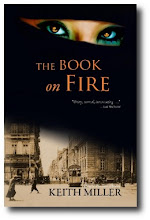
The second edition of my second novel, The Book on Fire, has been released by Immanion Press. It has a new cover, and includes a long bonus story, “City of Bones,” about a sojourner in a post-apocalyptic Alexandria. It is available from Amazon and Barnes & Noble, as well as select brick-and-mortar bookstores.

August 21, 2011

Strange Gifts


My mother (who's on a roll - see this post) has just put out a book of vignettes entitled Strange Gifts: Reflections on Aid in Africa. It is available for purchase on Amazon. I put together a little website for her, where you can see all the books and calendars she's produced, and read a few of the occasional papers she put out in her career as a music educator.

August 20, 2011

A Life on Paper Review


My wife, Sofia Samatar (whose first novel, A Stranger in Olondria, recently sold to Small Beer Press - more about that later!), has written a nice review of French Borgesian-fantasy/slipstreamish writer Georges-Olivier Châteaureynaud's A Life on Paper.

August 10, 2011

I Am Because We Are

For a number of years, my lovely mother, Annetta Miller, has collected proverbs from around Africa. She now has over a hundred thousand, neatly arranged by category on her desk. She has put the collection to use in interesting and creative ways. Her themed calendars, which are put together by street children at Don Bosco Press in Kenya, are perennial best sellers at Ten Thousand Villages. Proverbs also complement the vignettes in her book Sharing Boundaries.


My mother and her photographer friend Betty Press have put together a book entitled I Am Because We Are: African Wisdom in Image and Proverb, published in partnership with Books for Africa. You can learn about the book, and buy it, here.

August 4, 2011

Longonot and Naivasha


photo: Kalense the Kid


My family and I spent the month of July in Kenya, where I grew up. One of the things I wanted to do (besides eat murg makhanwala and nyama choma!) was climb Mt. Longonot, a dormant volcano, with my kids.

I went to high school at Rift Valley Academy, which is on the side of the escarpment. Longonot dominated the landscape, and I used to draw it constantly. Its slumbering form has inhabited my dreams.

Longonot, which last erupted in 1863, is a classic caldera. It took about two hours to climb with the kids (aged five and eight). My son basically had to be dragged up the steeper sections, and a couple times I didn't think he was going to make it. But it was all worth it for the stunning experience of reaching the top and peering over the rim, which is only a couple paces across. The floor, several hundred meters below, is carpeted in bush. Sulfuric steam rises from a fissure in the wall. On the outer slopes, one can see very clearly where the lava spilled over the edge and pooled.


photo: Tambako the Jaguar

From the top of Longonot, we could look over at Lake Naivasha, which is just an hour and a half from Nairobi, and used to be a favorite vacation spot when I was a kid. The lake is now surrounded by huge greenhouse-type structures, where flowers are grown for export to Europe. Planeloads fly out daily. This generates a lot of cash, but growing flowers requires a huge amount of water, and the lake is rapidly shrinking. When I was young, we used to take boats to Crescent Island. As you can see in the satellite photos below, the island became a peninsula about ten years ago (though, amusingly, it's still called "Crescent Island").

But now the open end has almost closed up, creating another, smaller lake. One effect of this shrinking is that there is now about a mile of new, pristine parkland beside the lake, where giraffe, impala, zebra, and waterbuck gambol. It's lovely to stroll there in the late afternoons. But in a few years, unless some sort of action is taken, Lake Naivasha will be no more.


photo: mckaysavage

July 25, 2011

The Readers' Fruit


Cherries are the perfect fruit for reading. Peaches and mangoes are too messy. Apples are fine (though they're better for walking: "Apples for walking, and a pipe for sitting . . ." as Sam Gamgee says). Apricots are excellent. But cherries! The handy little stem! The fun little seed!

I remember one vacation in Platres, up in the highlands of Cyprus (and incidentally the town where King Farouk invented the brandy sour: he needed an alcoholic drink that looked like iced tea, so he could drink while entertaining conservative Muslims!). My wife and I were the only guests at a cute little hotel. It had an enormous, sunny balcony, with a view down over the grapevines and tiled roofs. I bought a bag of cherries and put them in a big bowl, and we sat with our feet up, reading and eating cherries. I was reading Middlemarch, as I recall - my first experience with the extraordinary George Eliot, and somehow the cherries matched her sweet, tart, polished prose . . .

July 19, 2011

"Toto's 'Africa'" . . . by Hemingway


My wife and I get our kicks from reciting the nonsensical lyrics to pop songs. Excellent examples include Duran Duran's "Hungry Like the Wolf" and the Bee Gees' "Staying Alive." Our favorite, though, is certainly Toto's "Africa," which sounds like it should mean something, but is just ridiculous:

"It's gonna take a lot to take me away from you
There's nothing that a hundred men or more could ever do
I bless the rains down in Africa
Gonna take some time to do the things we never have

The wild dogs cry out in the night
As they grow restless longing for some solitary company . . ."

The video is priceless.

I was therefore delighted to discover that Anthony Sams on McSweeney's has written up "Africa" as a short story by Hemingway. Here's a sample:

"The young man looked at the wristwatch again. His head spun from whiskey and soda. She was a damned nice woman. It would take a lot to drag him away from her. It was unlikely that a hundred men or more could ever do such a thing. The air, now thick and moist, seemed to carry rain again. He blessed the rains of Africa. They were the only thing left to bless in this forsaken place, he thought—at least until she set foot on the continent. They were going to take some time to do the things they never had."

July 17, 2011

Sebald's Last Interview


Here is the last interview by W.G. Sebald, before he died in a car crash at the age of 57. He was author of Vertigo, The Emigrants, The Rings of Saturn, and Austerlitz. All four books were published in the last decade of his life.

I liked his comments about writers and walking.

May 29, 2011

SQUEEEEEE!


Catherynne M. Valente is in Madison for WisCon, and I got to hear her read yesterday afternoon (from Fairyland)! In person, she's taller and quite a bit more attractive than I'd imagined, with long witchy hair and smouldering eyes. She's a great reader, and had the audience in stitches. Fairyland is doing extremely well - it's on the NY Times best seller list at the moment. I started reading it aloud to my daughter last night, and she's loving it.

May 8, 2011

Churches on Fire


I was disheartened to read this morning that a mob set a church on fire in Cairo. This is the latest in a series of violent inter-religious incidents that began on New Year's Day with the bombing of a church in Alexandria, in which twenty-three people died. I worry that the loosening of the political strictures has also freed people to express long-repressed emotions about the "other side." Christians form a substantial, prominent minority in Egypt (10-15%). Their religious practices and religious language (Coptic) are deeply connected to the ancient pharaonic religion.

Though many Egyptians, Muslim and Christian, are viscerally antagonistic toward each other, there are some outstanding exceptions. My wife and I spent three wonderful years working with Mennonite Central Committee in Beni Suef, where we were seconded to the Orthodox Church. Our supervisor, Father Youssef Andrawas, was one of the most saintly people I've encountered, with a passion for creating dialogue between Muslims and Christians. You can read a first-person account of his life and ministry, as well as a bit about our work, in this issue of A Common Place magazine (PDF file).

Beautifully, Christians met in their burned-out church on Sunday to celebrate mass (both images are from Storyful):

May 1, 2011

The Girl Who Circumnavigated Fairyland


Catherynne M. Valente's latest novel, The Girl Who Circumnavigated Fairyland in a Ship of Her Own Making (which started out as a novel mentioned in Palimpsest) is available as a free download till May 2 from here. This is actually the work that first got me interested in Valente, when she was putting it out chapter by chapter on her website.

April 14, 2011

Bad People


BAD PEOPLE
Robert Bly

A man told me once that all the bad people
Were needed. Maybe not all, but your fingernails
You need; they are really claws, and we know
Claws. The sharks - what about them?
They make other fish swim faster. The hard-faced men
In black coats who chase you for hours
In dreams - that's the only way to get you
To the shore. Sometimes those hard women
Who abandon you get you to say, "You."
A lazy part of us is like a tumbleweed.
It doesn't move on its own. It takes sometimes
A lot of Depression to get tumbleweeds moving.
Then they blow across three or four States.
This man told me that things work together.
Bad handwriting sometimes leads to new ideas;
And a careless God - who refuses to let you
Eat from the Tree of Knowledge - can lead
To books, and eventually to us. We write
Poems with lies in them, but they help a little.

March 27, 2011

Ishi and Le Guin


Wired magazine has an article about Ishi, the last of the Yahi tribe of American Indians, who died on March 25, 1916. He emerged from the wilderness in 1911, and was offered a place to stay at San Francisco's museum of anthropology. The anthropologists who took him in were T. T. Waterman and Alfred L. Kroeber. Kroeber's wife, Theodora Kroeber, later wrote Ishi in Two Worlds, based on Alfred's notes (she hadn't met Ishi).

Now, Alfred and Theodora Kroeber were, of course, the parents of Ursula Kroeber Le Guin. It is interesting to speculate on the impact the Kroebers' anthropological work had on her fiction. Always Coming Home and "Buffalo Gals Won't You Come Home Tonight" certainly draw heavily on American Indian culture. "Ishi" actually means "man" in the Yana language - he refused to reveal his true name. The notion of secret, powerful "true names" is, of course, central to the Earthsea books. Ged, as described in her novels, might have looked something like Ishi. And the trope of the solitary carrier of information is present in works such as The Tombs of Atuan, "The Stars Below," and The Dispossessed.